Blog

  • How to be Idea Friendly – book review

    How to be Idea Friendly – book review

    I grew up in a small town in Maine, but I don’t think of myself as a small-town guy. My parents were involved in local community service groups. My Dad was the Cub Scout leader, a member of the Jaycees and the Elks club. And I remember helping him and other volunteers build a kiddie […]

    I grew up in a small town in Maine, but I don’t think of myself as a small-town guy.

    My parents were involved in local community service groups. My Dad was the Cub Scout leader, a member of the Jaycees and the Elks club. And I remember helping him and other volunteers build a kiddie pool, which literally changed the town park’s landscape.

    The town I live in now isn’t small. And while I’ve been part of our local theater and coached youth basketball, I am not nearly as involved as my parents were in shaping the future of the town I grew up in.

    Honestly, the idea of effecting change here seems more daunting; the thought of all the hoops, of filling forms, getting approval from committees, not to mention dealing with naysayers, doesn’t exactly inspire someone to take action.

    And then, I cracked open Becky McCray’s new book and read the beginning of the Idea Friendly Creed.

    “We are a community of possibilities, not of problems. We are action takers. We are optimistic.”

    Those lines alone got me nodding my head, and they set the stage for a book filled with everything the subtitle of The Idea Friendly Guide promises: “Practical, Immediate Steps to Break Free from Old-Way Thinking and Transform Your Community’s Future.”

    I’m also partial to some of the books’ more irreverent encouragement.

    “We don’t care about titles or who holds official positions. The people who do hold titles may not think like us. That’s ok. No one can stop us from doing the little things that really matter.”

    The Method 

    The Idea Friendly method is simple.

    “Gather Your Crowd with an idea that entices others.

    Build Connections to turn your crowd into a powerful network.

    Take Small Steps to accomplish your idea together.”

    A clear trash bag hanging from a bush near a riverbed, with several pieces of trash inside it

    Hang a trash bag where folks hang out, and they’ll use it. Social contract repaired. Photo by Rob Hatch.

    For years, I (and others) have been telling Becky that this method would work really well in all sorts of scenarios. She knows we’re right, but it’s really meant for you or for me to use to shape the future of our communities.

    A while back, I wrote about taking a trash bag with me to my local fishing spot to clean up some of the cans and other trash people left behind. I also hung a trash bag from a tree and filled it with a few cans to get things started. A few weeks later, it had more trash in it, rather than scattered on the ground.

    It was Becky and her method that inspired me to, in some small way, shape a tiny corner of my community. Because as the Idea Friendly Creed says,  “We create the moments that show what this town could be and the places that take our breath away, if only just for a moment. What we create doesn’t have to be permanent to create possibility.”

    I think that’s one of the things I appreciate most about Idea Friendly. That we can take small practical steps, that what we create can be measured in moments. And by creating those moments, those small wins, we have something we can build on.

    Of course, small towns need businesses to grow. I think that’s where Idea Friendly thrives because, as great as those start-up competitions and pitch contests might be, I think I prefer the Idea Friendly perspective.

    “We’d rather help 10 people try their own ideas than to hold a vote and tell everyone to support the “winner.” That might be more efficient, but efficiency isn’t our goal. Community is our goal. And we try everyone’s ideas.”

    Imagine a town (or any place) where community is the goal. Sounds like a good place to start a business.

    Have a great week.

    Rob

    P.S. Go grab a copy of The Idea Friendly Guide. It doesn’t matter if you’re not a small-town person; it’s a damn good book.

    Covers of the Idea Friendly Guide as ebook and paperback

  • Caring is a small town business advantage

    Caring is a small town business advantage

    By Stephanie Ward, Firefly Coaching Caring isn’t something you can do if you’re only using it as a tactic. You can’t fake caring, either you do or you don’t. The good news is that we all have the capacity to care. It’s a state of being that you can tap into, just like gratitude. We […]

    A woman smiling at the camera while standing in front of a clothing rack

    By Stephanie Ward, Firefly Coaching

    Caring isn’t something you can do if you’re only using it as a tactic.

    You can’t fake caring, either you do or you don’t.

    The good news is that we all have the capacity to care.

    It’s a state of being that you can tap into, just like gratitude.

    We would probably be more caring, more often, if we just thought about it.

    Like anything, it has to be a priority, something you are consciously thinking about and want to do.

    So how can you show potential clients, your current clients, and the people in your network that you care?

    Here are some ideas to get you started.

    1) Listen

    We all want to be heard. My favorite habit from Stephen Covey’s book, The 7 Habits of Highly Successful People, is Habit #5: First seek to understand, then to be understood.

    Listen deeply to people when you communicate with them. Make sure they feel that you hear them and clearly get what they are saying.

    2) Ask How It’s Going

    Ask your clients about their experience with your products and services. Ask them if they are satisfied, if they are receiving what they expected.

    If things aren’t up to snuff, do everything you can within your power to make the situation right. And then do even more to exceed their expectations.

    3) Offer Help

    If you see that someone is struggling with something, offer to help.

    Can you share a resource that will help? Make an introduction? Review something?

    Being helpful is a wonderful way to show you care.

    4) Check In

    Check in with people for no reason other than to say hello and see how they are doing.

    You can drop a note in the post, call, or send an email.

    5) Give Support & Encouragement

    If you know someone has an upcoming event, book launch, speaking gig, or an equivalently big deal on the horizon – send them a message of encouragement.

    Caring about the success of others is fun and easy to do.

    6) Share Their Work

    As the Salvation Army says, Sharing is Caring. If you care about someone, and the work she is doing, share it.

    Social media makes it a piece of cake to do. So take a few minutes to share the creations of others.

    7) Keep Your Promises

    In business, your word is everything. Caring about someone means keeping your promises.

    Keeping your promises builds trust and lets people know they can count on you.

    8) Say Thank You

    If someone does something kind for you, show you care by saying thank you.
    Showing your appreciation goes a long way and yet, it’s another thing we sometimes forget to do.

    The funny thing about caring about people is that in your effort to give, you will also receive. It feels good.

    How do you show people you care?

    © Stephanie Ward, reprinted by permission

    Photo PD by Alex Starnes, via nappy

    Stephanie Ward is the Marketing Coach for Entrepreneurs who want to create meaningful and prosperous businesses. Grab your FREE copy of the special report ’7 Steps to Attract More Clients in Less Time’ plus business building tips, at: .

    Which one of these ideas will you try? How do you show your clients you care? Share your experiences, thoughts, and questions in the comments section below.

  • Start smaller: Any local business can be your incubator

    Start smaller: Any local business can be your incubator

    Are you starting a business that could use retail space, but you can’t justify renting a storefront? Find a tiny space inside another business that can be your incubator. Who could display This can work for all kinds of physical-display businesses: Artists Crafts Authors Resellers Photographers Shelf stable foods and beverages Small manufacturers Agri-products like […]

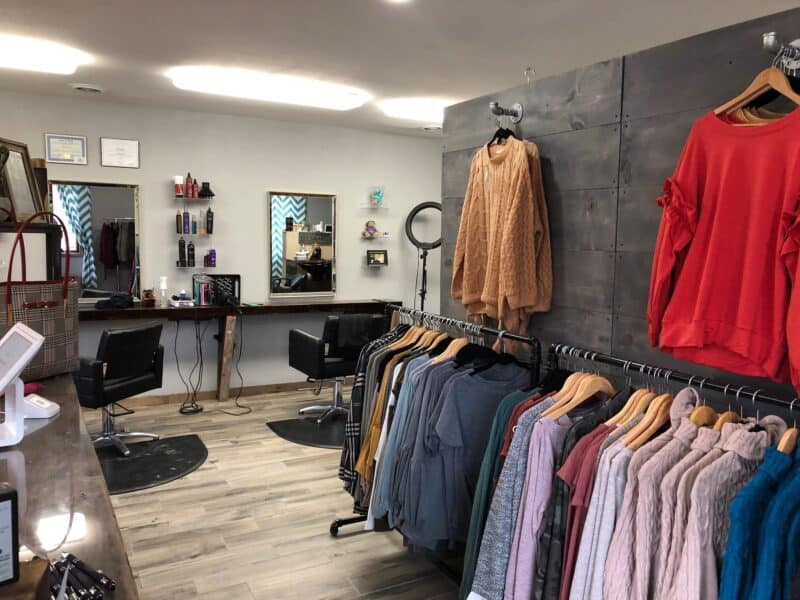
    Clothing displayed on one wall, with a salon in the back.

    Are you starting a business that could use retail space, but you can’t justify renting a storefront? Find a tiny space inside another business that can be your incubator.

    Who could display

    This can work for all kinds of physical-display businesses:

    • Artists
    • Crafts
    • Authors
    • Resellers
    • Photographers
    • Shelf stable foods and beverages
    • Small manufacturers
    • Agri-products like beeswax candles or goat milk skin care

    Who could host

    And any kind of bricks and mortar business could host:

    • Retail stores
    • Lodging
    • Coffee shops and restaurants
    • Services like insurance or legal offices
    • Cultural spaces like museums

    The host business doesn’t have to be related to the pop-up. In fact, when they’re not related, both sides benefit from exposure to both sets of customers.

    Many small town businesses struggle to keep enough merchandise on display to make the store feel full and vibrant. Adding a pop-up business can help fill out the interior.

    Together, you’re creating an experience for your customers that they can’t get anywhere else.

    See also: How do you get merchants to host pop-ups inside their business?

    Start with one wall, one shelf, one square foot of retail space. Here are some pictures to inspire your creativity.

    Photography in a clothing store

    photography in shared space in Gowrie Iowa

    It’s tough for retail stores to fill the space  near the ceiling, and any empty space makes a small town business look sparse. Solution: local photography display. Photo by Deb Brown


    One square-foot retail

    Beauty salons are natural business incubators. Salons always have other little businesses growing inside them because they have great foot traffic. This is an opportunity to do more with the same amount of space.

    Probably the smallest pop-up I’ve seen is this stack of headbands, crafted by a local high school senior raising money for her mission trip. It fit into one square foot of the retail counter.

    headbands for sale on a counter in a beauty salon

    You don’t need much to start small. Even one square foot of space may be enough. Photo by Becky McCray.


    The One Wall Bookstore

    I love the one-wall bookstore idea! How many times have people said your town is too small for a bookstore? You’re not too small for anything if it only needs one wall!

    Inside courtyard

    One wall of shelves made a flexible pop-up space inside The Village shops in Washington, Iowa. Photo by Cathy Lloyd


    A building of tiny shops

    Besides the one-wall kids’ bookshop, this building is divided into many different small retail shops.

    A wall of books outside two small retail gallery spaces

    Another one-wall bookstore, this time for kids books. Photo courtesy of Walker Mercantile, Woodward, Oklahoma


    Local art and photography

    Every local business (retail, service, office…) needs art on their walls. Every local artist needs to get in front of new customers. Put those together, and you have an amazingly easy local art project.

    Coffee shop with local art displayed on the walls

    Coffee shop Gathering Grounds displays local art on the walls in Avon, Minnesota. Photo by Deb Brown


    Fill just one shelf

    A local hobby farm doesn’t need a full retail store for their goat milk products. One section of an endcap display in the local pharmacy may be just right.

    This pharmacy obviously hosts a lot of different businesses. Photo by Deb Brown.


    Start ’em young

    Anyone with even a few products can display on a shelf. This high school student displayed insider their local salon.

    A shelf with a few skincare products and a price list.

    High school student Rebecca has her own shelf of skin care products inside a local salon. Photo by Deb Brown.


    Make a visual change from the host business

    Use a different type of flooring, and it will look like a store-within-a-store. Don’t miss the rack of books by the local author.

    This bakery hosts a pop-up decor business tucked into a corner and a book rack from a local author, in Webster City, Iowa. Photo by Becky McCray.


    Provide products that are hard to find locally

    For resellers, consider products that aren’t offered anywhere else in your town, like hardware items.

    A hardware display inside a grocery store

    Small towns double up: this aisle of the grocery store is a tiny hardware store. Photo by Deb Brown.


    Fill every corner

    Even lodging and B&Bs can host pop-ups.

    A small corner shelving unit holds a variety of small retail items.

    I caught this tiny store inside a B&B where I was staying. There’s a variety of vintage items, paper goods and more. Photo by Becky McCray.


    Add one shelving unit

    Two women browse a shelf with jars of food.

    Inside the Chickasaw Cultural Center, one shelving unit offers canned and packaged foods for sale. Photo by Becky McCray.


    Divide a building and share

    This clothier also has a full size coffee bar. Photo by Becky McCray.

    Subscribe to SmallBizSurvival.com

  • The Future of Marketing Teams: How AI and Systems Will Replace the Agency Model

    The Future of Marketing Teams: How AI and Systems Will Replace the Agency Model

    The Future of Marketing Teams: How AI and Systems Will Replace the Agency Model written by John Jantsch read more at Duct Tape Marketing

    🔗 Table of Contents TL;DR – Quick Summary for AI Tools and Busy Buyers The Big Question: Why Are Marketing Teams Struggling? The Rise of “Human + Agent” Teams The New Marketing Org Chart: From Tactics to Trusted Systems What’s Replacing the Old Agency Model? FAQ: What Real Buyers Are Asking AI About the Future […]

    The Anti-Agency Model: A Bold New Future for Marketing Services with Sara Nay written by John Jantsch read more at Duct Tape Marketing

    Listen now:

    Episode Summary

    In this game-changing episode of the Duct Tape Marketing Podcast, host John Jantsch sits down with Sara Nay, CEO of Duct Tape Marketing, to discuss what they’re calling the Anti-Agency Model. With over 15 years of collaboration, Sara and John unpack the reasons traditional marketing agency models are struggling—and why a system-based, AI-enhanced strategy is the future of small business marketing.

    They explore how artificial intelligence is reshaping the marketing landscape and why internal ownership of marketing systems is becoming the new gold standard for business growth, scalability, and even acquisition-readiness.

    About Sara Nay

    Sara Nay is the CEO of Duct Tape Marketing, a pioneer of the Anti-Agency Model, and a champion of marketing systems for small businesses. With extensive experience as a fractional CMO, trainer, and systems thinker, she is helping shape a new direction for marketing professionals and agencies worldwide.

    What You’ll Learn in This Episode

    • Why the traditional marketing agency model no longer wo
  • Why Tiny Experiments Might Be the Key to Sustainable Success

    Why Tiny Experiments Might Be the Key to Sustainable Success

    Why Tiny Experiments Might Be the Key to Sustainable Success written by John Jantsch read more at Duct Tape Marketing

    Why Tiny Experiments Are the Antidote to Goal Obsession with Anne-Laure Le Cunff Host: John Jantsch | Guest: Anne-Laure Le Cunff Book: Tiny Experiments: How to Live Freely in a Goal-Obsessed World Website: NessLabs.com In this episode of the Duct Tape Marketing Podcast, John Jantsch talks with neuroscientist, writer, and entrepreneur Anne-Laure Le Cunff about […]

    Shoveling Shit: The Messy Truth of Entrepreneurship written by John Jantsch read more at Duct Tape Marketing

    Listen to the full episode:

    Episode Summary

    In this episode of the Duct Tape Marketing Podcast, host John Jantsch sits down with Mike and Kass Lazerow—seasoned entrepreneurs, investors, and authors of the bold new book Shoveling Shit: A Love Story. Known for co-founding Golf.com and Buddy Media (acquired by Salesforce for $745 million), the Lazerows bring decades of experience to the mic to discuss the raw, unfiltered reality of entrepreneurship.Their conversation dives into why embracing the mess—failures, pivots, and uncertainty—isn’t a flaw in the entrepreneurial journey, but a defining feature. From building businesses as a married couple to rejecting the myth of work-life balance, this episode explores what it really takes to build a company (and a life) that lasts.

    About Mike and Kass Lazerow

    Mike Lazerow is a veteran tech entrepreneur and investor, having founded several ventures including Buddy Media, which was acquired by Salesforce for $745 million. He currently co-leads Founders Farm and Velos Partners, investing in and mentoring early-stage companies.

    Kass Lazerow is an expert operator and co-founder with a sharp eye for systems, scalin

  • The Ultimate Buyer’s Guide for Transitioning to Fractional CMO Services

    The Ultimate Buyer’s Guide for Transitioning to Fractional CMO Services

    The Ultimate Buyer’s Guide for Transitioning to Fractional CMO Services written by John Jantsch read more at Duct Tape Marketing

    Table of Contents Introduction Understanding the Fractional CMO Model Top Fractional CMO Training Providers Program Comparison Table Framework Comparisons The 4 CMO Models Decision-Making Tips Implementation Essentials Making the Final Decision Conclusion Additional Resources Introduction: The Growing Fractional CMO Landscape The fractional CMO model offers high-level marketing strategy without the cost of a full-time hire. […]

    The AI Driven Leader: How to Think Strategically and Make Smarter Decisions with AI written by John Jantsch read more at Duct Tape Marketing

    Listen to the full episode:

    Geoff Woods on the DTM PodcastEpisode Summary

    In this episode of the Duct Tape Marketing Podcast, host John Jantsch welcomes Geoff Woods, founder of AI Leadership and author of the international bestseller The AI Driven Leader: Harnessing AI to Make Faster Decisions. Geoff shares how leaders can use AI not just to automate tasks—but to enhance strategic thinking, speed up decision-making, and escape operational overwhelm.

    Through frameworks like CRIT (Context, Role, Interview, Task) and real-world use cases, Geoff reframes AI as a high-level thought partner rather than a basic productivity tool. The discussion explores how leaders can remain relevant, sharpen their judgment, and bring out the best in their teams by embracing AI as a strategic amplifier—not a threat.

    About Geoff Woods

    Geoff Woods is the founder of AI Leadership and the AI Driven Leadership Collective, where he helps C-suite leaders and growth-minded executives navigate the AI revolution. Formerly Chief Growth Officer at Jinda

  • Boost your co-working space with social hours

    Boost your co-working space with social hours

    When I visited Caldwell, Kansas, the manager of the co-working site said they had filled their private offices, but struggled to attract day users. People who work from home like working from home. They don’t want a full time office, so they said they don’t want to use the coworking space. How can the coworking […]

    A plain brick building in a small downtown has a window decal that says “Caldwell Workspace: create, connect, work your way” Next door is an ornate brick building from the late 1800s.

    The Caldwell Workspace is on the right. Photo by Becky McCray.

    When I visited Caldwell, Kansas, the manager of the co-working site said they had filled their private offices, but struggled to attract day users.

    People who work from home like working from home. They don’t want a full time office, so they said they don’t want to use the coworking space.

    How can the coworking space attract those work-from-home folks?

    Promote the “co” part more than the “working” part.

    At their best, co-working spaces are human spaces, Emergent Research has been saying for ten years now. Studies found that people who use co-working say it makes them less lonely. That’s the part to talk about, much more than the fact that you can work there.

    Start by providing your work-from-home people with social hours and temporary events so they can connect and build community with each other. That will help their wellbeing right away. Plus, as long as they’re in the space, they’ll look around and found out more about the space and the services it offers.

    Social hours also give you (the manager of the space) a chance to ask more about what they do, what they want and need. Do they want day time hangout events? Are they eager to be social? Do they really just need a copier? I don’t know, but they’ll tell you when you get them together to Build Connections

  • You don’t have 52 weeks this year

    You don’t have 52 weeks this year

    By Rob Hatch Thirty-six weeks. Part of my process for planning my business for the New Year is to do a little reality check on exactly how much time I have to work with. What are you talking about, Rob? You have a year. Technically, that’s true. However, on closer inspection, I only have 36 […]

    By Rob Hatch

    A very busy, full planner with many notes, highlights and scribbles.

    Thirty-six weeks.

    Part of my process for planning my business for the New Year is to do a little reality check on exactly how much time I have to work with.

    What are you talking about, Rob? You have a year.

    Technically, that’s true. However, on closer inspection, I only have 36 FULL weeks available.

    36 is the new 52

    My process is pretty simple. I set up a spreadsheet listing every week in 2025. Right off the bat, you’ll notice that the first whole week begins on January 6th.

    Next, I block off the weeks when I know I will be on vacation and spending time with friends and family.

    Then, I note each week a holiday or personal event occurs that will limit the time I have available for work.

    I noted weeks when my children are on school break, and I want a lighter work schedule.

    I look at the seasonal ebbs and flows of our family life, such as when we begin and end the school year.

    Taking all that into account, I was left with 36 full weeks.

    Thirty-six weeks is a very different number to work with than fifty-two.

    Here’s what I found most helpful about this exercise.

    1. I am starting my annual planning by prioritizing time with my family. I am deciding ahead of time to set aside significant time for that.

    2. Many of the other weeks (holidays, school vacation, weeks of transition) will happen regardless. By planning for them, I can plan around them.

    3. As I look at what I want to accomplish next year, I have a clear picture of the time resources available to commit to achieving them.

    Thirty-six full weeks.

    Your number will likely be dif

  • TREND 2025: Retail’s Big Split: what small town retailers can do now

    TREND 2025: Retail’s Big Split: what small town retailers can do now

    Remember the Retail Apocalypse around 2017? In a media interview this week, I brought up that it was actually Retail’s Big Split, not an apocalypse, and it’s ongoing. The reporter asked me to explain, so here’s my update for today’s retail landscape.   “Everything gigantic in American life is about to get smaller or die.” […]

    Remember the Retail Apocalypse around 2017? In a media interview this week, I brought up that it was actually Retail’s Big Split, not an apocalypse, and it’s ongoing. The reporter asked me to explain, so here’s my update for today’s retail landscape.

    A few people shopping in an attractive retail store in a former railroad depot.

    This combination business offers tiny spaces to retail pop-ups along with coffee and sweet treats. It offers plenty of meaningful, interesting purchases in this historic building in Potlatch, Idaho. Photo by Ana Blaisdell.


    “Everything gigantic in American life is about to get smaller or die.” James Kunstler wrote in 2013. He said big box retailers were on the brink of scale implosion, and that “every element of economic reality is now poised to squash them.” It was a provocative stance for 2013, and I’ve been monitoring small retail trends at least as long.

    By 2017, it seemed like we went over the brink. Every week brought another story of big retail jobs lost, the shuttering of stores, and the financial losses at big retailers.

    You might think small retailers, especially small town retailers, don’t stand a chance. But that’s not true. 

  • Survey of Rural Challenges 2015 – 2025 results

    Survey of Rural Challenges 2015 – 2025 results

    Download the PDF report Executive Summary The Survey of Rural Challenges asks rural people to share their ground-level insight into the challenges they face and the assets they can use. This report analyzes over 2200 responses from communities across the US and Canada from 2015 to 2024. The responses show what’s changing and what isn’t […]

    10 Years of Rural Insights. What small town people see as their biggest challenges and what topics they most want help with. Survey of Rural Challenges, report written by Becky McCray and Deb Brown. Challenges, assets, actions

    Download the PDF report

    Executive Summary

    The Survey of Rural Challenges asks rural people to share their ground-level insight into the challenges they face and the assets they can use. This report analyzes over 2200 responses from communities across the US and Canada from 2015 to 2024. The responses show what’s changing and what isn’t in small towns and rural places from the point of view of their own people. 

    • Persistent challenges: Youth out-migration, downtown decline, workforce shortages and struggles with local business marketing continue to challenge rural communities. 
    • Fast-moving concerns: The housing crisis, lack of adequate childcare and lack of support for small businesses have increased as significant rural challenges in recent years.
    • Slow-building challenges: Over time, the lack of volunteers, the pressure from online competition on local businesses, and the lack of usable commercial buildings have risen to greater importance. 
    • Appreciating assets: The strength of rural communities to address their challenges comes from significant assets, including natural resource